
The worst time to discover a breed restriction is at the cargo terminal.
Your dog can be healthy. Your vet can be confident. Your crate can look enormous. None of that changes a carrier embargo. If the airline will not accept your dog's breed in your travel month, the journey stops there.
The other costly mistake happens much earlier: planning a move around the wrong airline window. By the time the problem surfaces, flights, accommodation and work dates may already be fixed.
I do not want you piecing together a decision from generic breed lists and old airline pages. I want to tell you exactly what applies to your dog, your airline and your month.
UK → UAE dog relocation · Free · No signup
Why these journeys need a different plan
Brachycephalic means "short-headed". It includes flat-faced, snub-nosed dogs such as pugs, French bulldogs and Boston terriers.
The concern is anatomical, not bureaucratic. A shortened skull does not reduce the soft tissue in the airway. These dogs commonly have narrower nostrils, elongated soft palates and smaller windpipes. Add stress, temperature changes, reduced air circulation and pressurised flight conditions, and the risk of breathing distress and overheating rises sharply.
That is why brachycephalic dogs face the strictest air travel restrictions of any pet category. Several airlines have lost brachycephalic pets in transit. Their rules are based on medical risk and documented incidents — not a judgment on how fit your individual dog appears.
A vet letter does not override a published restriction. Neither does paying more, calling the airline or arranging a larger crate. Sedation is not a workaround either — reputable airlines generally refuse sedated pets, and most vets will not prescribe sedation for air travel because it reduces the dog's ability to regulate breathing.
Is your dog affected?
The platform recognises 28 breeds as brachycephalic for air travel purposes — pugs, French bulldogs, Boston terriers, Cavalier King Charles spaniels, shih tzus and boxers among them. Within that group, around a dozen — bulldogs, pugs and their close mixes — are the breeds most frequently refused outright by major carriers.
Airlines do not publish a tiered structure of their own. Each applies its own breed, route and seasonal policy, and mixes are often treated differently again. That's why finding your dog on — or off — a generic list doesn't settle whether a specific carrier will accept the booking this year, on this route.
The planner does. It gives you the answer for your specific breed rather than asking you to interpret the category yourself.
The dates that can decide the journey
Emirates — to Dubai International Airport (DXB)
Emirates accepts brachycephalic breeds for arrival into DXB only between November 1 and April 30. During that open window, acceptance requires an indemnity waiver, a fit-to-fly veterinary assessment and a crate one IATA size larger than the standard size for your dog's measurements.
Outside the window — May 1 to October 31 — Emirates does not transport any brachycephalic breed. Mixes are evaluated case-by-case by the local SkyCargo office. Those dates are not guidance. They are a booking boundary.
Etihad — to Abu Dhabi (AUH), in-cabin and cargo
Etihad accepts brachycephalic breeds only between November 1 and March 1 — a narrower window than Emirates'. Outside it, Etihad refuses snub-nosed breeds entirely.
A dog that could still travel Emirates in October or April cannot travel Etihad in those same months. This is exactly why the final answer should be checked against your live itinerary, not inferred from a general guide.
Booking windows (UAE arrival)
- Emirates → DXB: November 1 – April 30 only.
- Etihad → AUH: November 1 – March 1 only.
Outside these dates, no brachycephalic breed is accepted on either carrier.
Why the season matters
Ground handling is part of the flight risk. Temperatures at Dubai International Airport (DXB) and Abu Dhabi International (AUH) routinely exceed 40°C between May and October.
A dog may spend time taxiing, loading, unloading or waiting in the cargo terminal. For a brachycephalic breed, that can mean heat stress before the aircraft is even airborne, followed by an elevated risk of respiratory complications in flight. Cooler months reduce that exposure. Even inside an airline's open window, timing matters — overnight arrivals are typically lower-risk than daytime ones.
The crate rule people underestimate
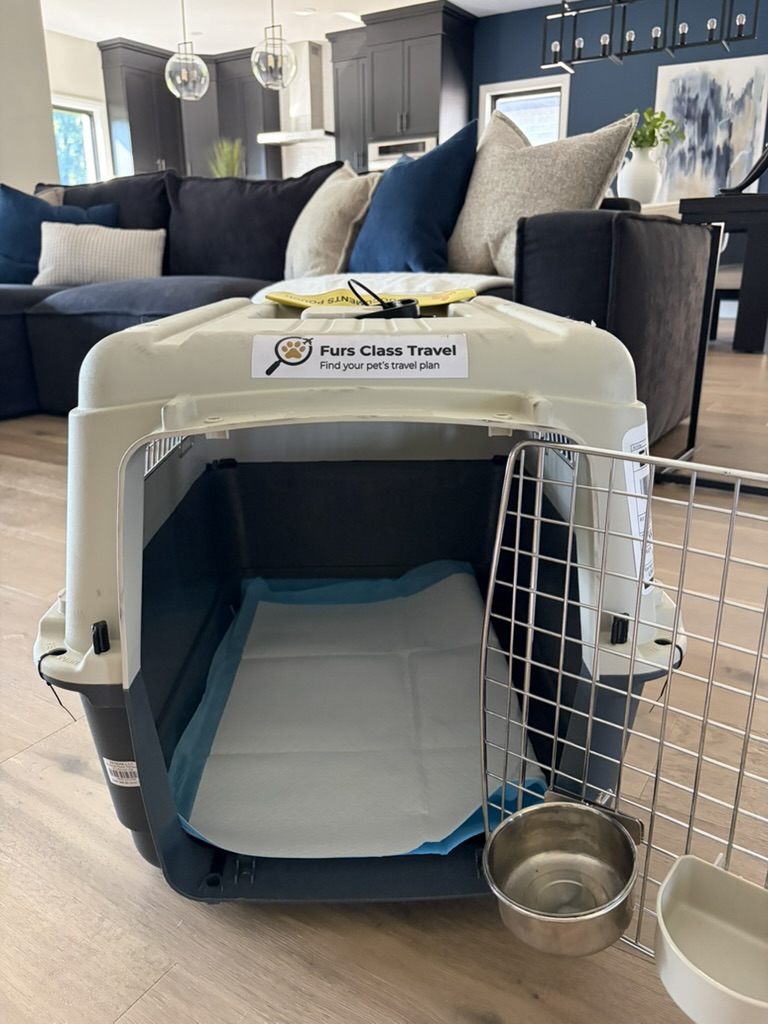
Standard IATA sizing uses your dog's measurements and weight. For a brachycephalic dog, the platform automatically recommends one IATA size larger than weight alone would suggest — extra headroom and ventilation for a dog with reduced respiratory capacity. It's also part of the acceptance conditions on routes such as Emirates during the open window.
The important point is not to guess "large enough". The correct crate follows from your dog's measurements and the carrier's rule. The IATA dog crate requirements guide covers sizing in full.
If your preferred flight will not work
A refusal does not always mean your dog cannot travel. It means that particular combination of breed, carrier, route and month does not work.
The viable answer may be a different airline. It may be a move into the open window. It may require a specialist pet relocation company with experience in higher-risk breeds, additional documentation or a custom crate arrangement. Routes, timing and costs change with the choice.
You should not have to compare every carrier to discover which of those possibilities is real. Tell me the dog, airline and month. I'll tell you exactly which restrictions apply and which routes remain open.
Frequently asked questions
Can a vet letter override a brachycephalic breed restriction?
Can I sedate my dog to help with the flight?
What dates does Emirates accept brachycephalic breeds into Dubai?
What dates does Etihad accept brachycephalic breeds into Abu Dhabi?
Does my dog need a bigger crate because it's brachycephalic?
What if my dog's breed or travel month means every airline refuses?
Get the exact answer for your dog
The rules are strict, but they are fixed. Your dog, airline and month are not the same as anyone else's.
Tell me the dog, airline and month. I'll tell you exactly which restrictions apply and which routes remain open.